Why this matters, and where your products fit
Sustainability can feel like a wall of acronyms and deadlines. Underneath all of it is something simpler, and more human: the planet has limits, we are crossing them, and the things we make are a large part of the reason. This page explains that honestly, and shows where your products, and the work we do together, fit in.
The limits that keep us safe
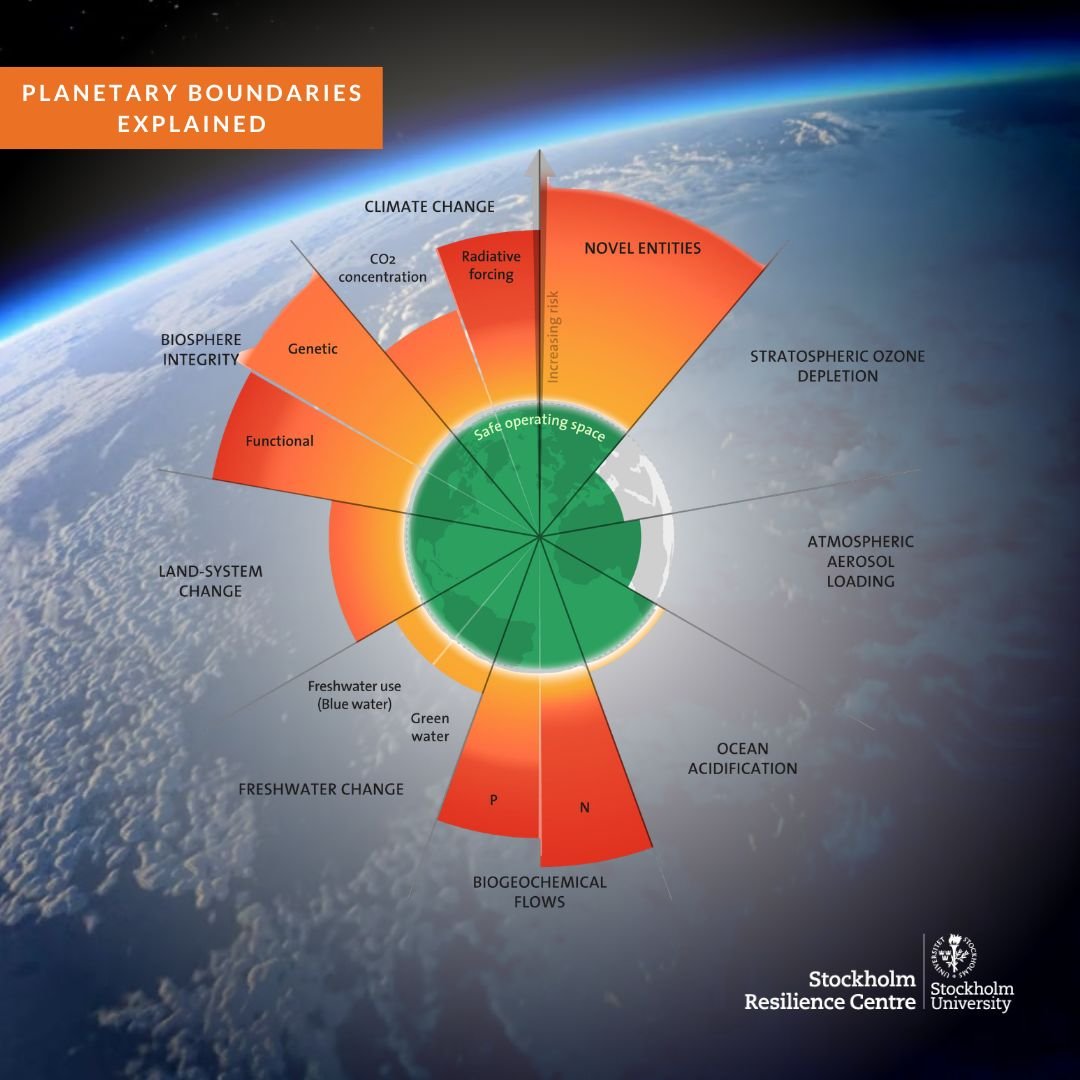
Scientists at the Stockholm Resilience Centre identified nine planetary boundaries: the natural limits within which humanity has thrived for the last ten thousand years. Stay inside them and the earth remains stable and hospitable. Push past them and we risk changes that are hard, and sometimes impossible, to undo.
The 2023 assessment in Science Advances, the first to measure all nine, found that six have already been crossed: climate change, the integrity of living systems, the flows of nitrogen and phosphorus, the way we use land, the state of our freshwater, and the rising tide of novel entities such as plastics and synthetic chemicals. This is not a distant forecast. It is where we already are.
Most of these pressures begin upstream, in how the world’s materials and products are made. That is a hard truth, but also a hopeful one: if industry helped cross the boundaries, industry can help bring us back within them.
A safe and just space for everyone
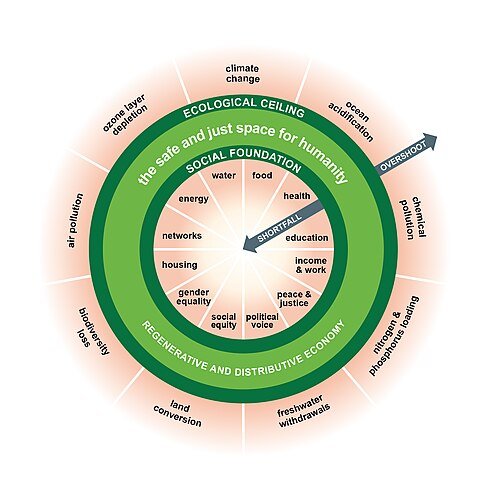
The economist Kate Raworth gave us a picture worth holding onto. Imagine a doughnut. Its inner ring is a social foundation: the food, water, health, housing and dignity every person needs. Its outer ring is the ecological ceiling, the planetary boundaries we must not overshoot.
A healthy economy brings everyone into the space between the two rings, meeting human needs without breaking the planet. Product-level environmental data is how a manufacturer learns which side of that ceiling it sits on, and by how much.
Environment, society and economy, held together
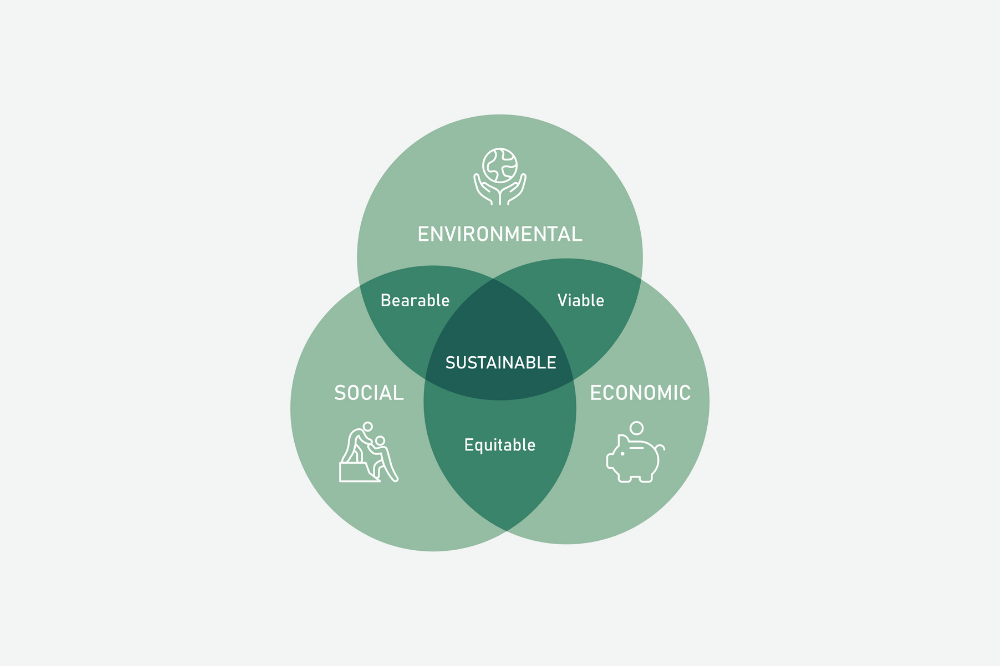
Sustainability is often described as three pillars, environmental, social and economic, that have to hold together. In real life, decisions are made where they compete: a cheaper material, a faster process, a new market.
Life cycle assessment gives the environmental pillar something the other two have always had, a number. When the environmental cost is measured, trade-offs are made with evidence instead of assumption, and “sustainable” stops being a slogan and becomes a choice you can explain and defend.
A plan the whole world signed
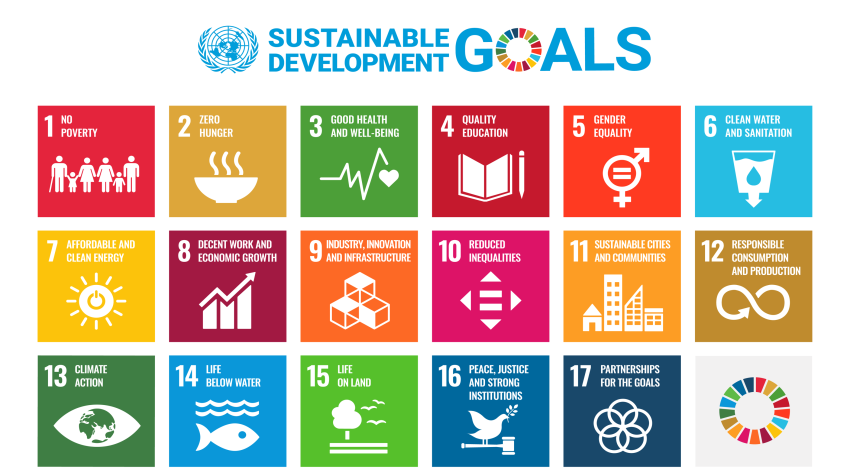
In 2015 the world agreed on 17 Sustainable Development Goals, a shared plan for people and planet by 2030. Not every goal belongs to industry, but several depend on it.
The verified metrics we produce feed most directly into Goal 9 (industry, innovation and infrastructure), Goal 12 (responsible consumption and production) and Goal 13 (climate action). Every credible product footprint is a small, concrete contribution to goals the whole world signed up to.
From a planetary limit to a decision you can make this quarter
Everything above can feel too big to act on. This is the part you can actually hold: the same science that describes the planet’s limits can be turned into a precise, verified number for one product, and that number is what moves things. Data today. Compliant tomorrow. Sustainable always.
Life cycle assessment
An LCA follows a product through its whole life and quantifies its impact at each step under ISO 14040 and ISO 14044. It turns an abstract planetary pressure into a concrete figure for your product, and shows exactly where that impact concentrates, the hotspots.
Output: reliable carbon and environmental data.
Environmental Product Declaration
Your own number is only a claim until someone independent checks it. An EPD formats the LCA results to a common Product Category Rule, has them verified by a third party under ISO 14025 and EN 15804, and publishes them so anyone can compare like with like.
Output: a verified EPD with embedded carbon data.
Compliance and trade
What began as good practice is becoming law. CBAM prices the embedded carbon in imported steel, aluminium and cement, and frameworks such as CSRD and CDP require disclosure auditors accept. Without verified product data, exporters face default values far higher than reality.
Output: compliance and protected trade.
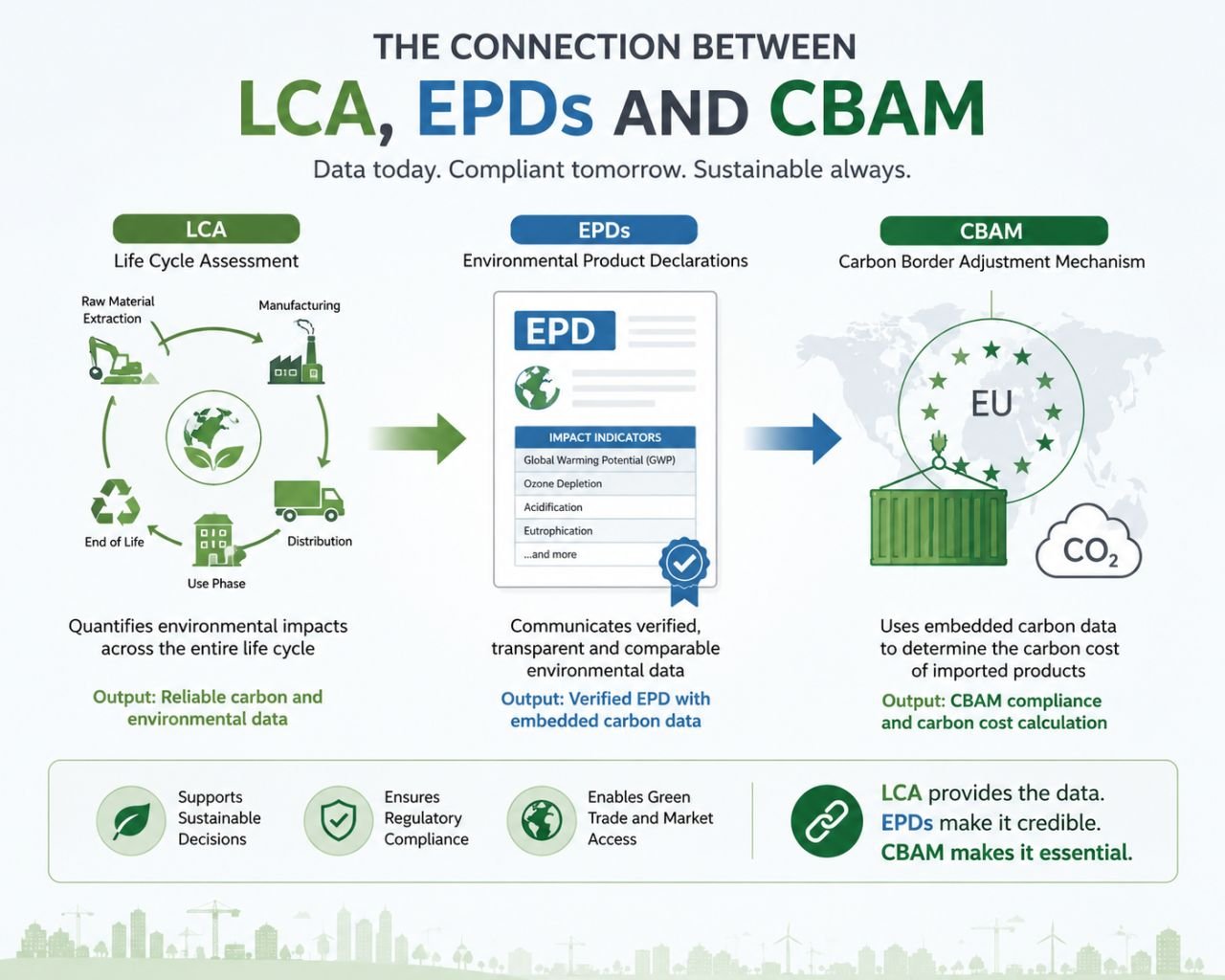
So the connection is not abstract. A life cycle assessment measures where a product stands against the limits described on this page. An Environmental Product Declaration makes that measurement trustworthy and comparable. Together they turn a planetary boundary into a decision a factory can take this quarter, and turn compliance from a cost into an advantage.
LCA provides the data. EPDs make it credible. CBAM makes it essential. That is the whole reason Climetrics exists, and where we come in.
Turn the big picture into your numbers
Start with one product, one verified figure, one honest step.
Talk to us